Bella Baxter’s European elopement
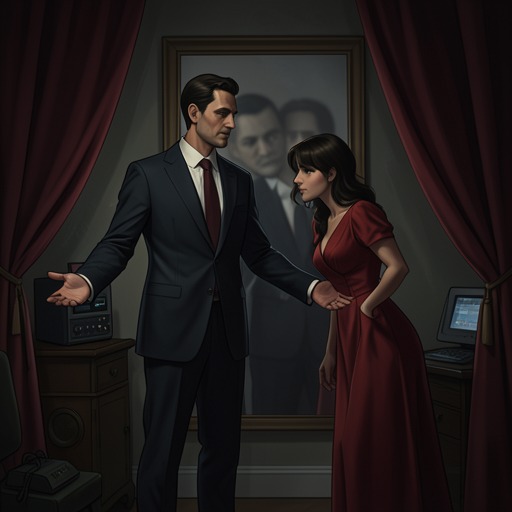
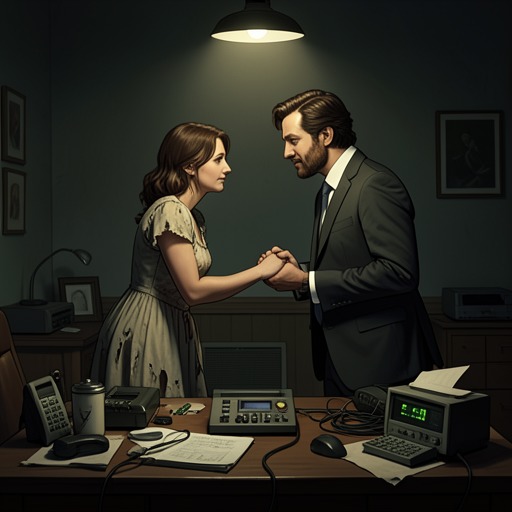
Poor ThingsBella Baxter’s European elopement with Duncan Wedderburn turns a wedding journey into a contest over money, dependence, and freedom. As Duncan’s gambling repeatedly strips him of cash and self-command, Bella moves from improvising ways to keep the trip going to deliberately ending it: she leaves him in Paris with the money she has saved and chooses to support herself by working. The episode’s shifts in power are practical as well as emotional, measured in tickets, hotel bills, hidden banknotes, and the journeys Bella arranges while Duncan is unable to act independently.
The gambling crisis and the journey east
After Duncan returns to their hotel penniless, Bella tells him that the five hundred he had bet her will allow them to continue their wedding trip the next day, and promises to return it. At the station he buys tickets to Switzerland, then leaves Bella with their luggage in the ladies’ waiting-room, saying he will smoke a cigar. Instead, he slips into a betting shop for another attempt to recover his losses and loses everything. He comes back in a state of agitation that Bella describes through the image of Hamlet over Ophelia’s coffin.
Bella decides that reassurance will not quiet him; she performs distress of her own, answering his panic with a hollow assurance that she will find money. She sends him to wait while she takes two hours for herself, then returns in time for the later train. During the next four days she refuses to explain their destination, repeating “Never ask!” Duncan is physically unwell, has run out of his anti-lethargy pills, and craves more. So dependent that he can go nowhere without Bella leading him by the arm, he can be left in a hotel room while she makes arrangements.
In Trieste, Bella books passage on a Russian vessel of the kind previously recommended as offering fewer gambling facilities and less social distraction. She cannot write its Russian name and records how it sounds as Cut-use-off. As they walk toward the docks in the rain, Duncan stops outside a tobacconist’s and asks whether they are going on a long voyage. His question marks a change in their journey: Bella, rather than Duncan, now controls where they are headed.
Odessa and the unequal voyage
The Russian merchant navy carries them to Odessa, where the ship stays for three days to take on a cargo of beetroots. By then Duncan is no longer jealous of Bella going ashore alone. He asks her to return as soon as possible, but permits her to leave without him. The change does not mean that the strain of the journey has disappeared; it shows that his dependence and exhaustion have displaced the possessiveness that had governed their earlier interactions.
The contrast between them persists at sea. Duncan later travels aboard a passenger ship, where he spends afternoons and evenings playing cards with men in the main saloon. On the voyage to Marseille, he orders wine with meals and insists that a meal without wine is no meal, although Bella drinks none because even a sip makes her giddy. She goes to bed while he continues playing. On the night before they reach Marseille, he returns delighted with his winnings, calls her affectionate pet names, and says that she had been right: games of skill, rather than games of chance, are his métier. He gets into bed the right way round for the first time in weeks. Bella begins to enjoy what he calls their second honeymoon, but recognizes that another reversal is coming; he falls asleep, while she remains awake, knowing she cannot prevent it.
Marseille: winnings lost again
Rather than travel directly from Marseille to Paris, the couple stays at a hotel recommended by one of Duncan’s fellow card players. That acquaintance introduces Duncan to a café, club, or card-school, where Duncan plays every afternoon and evening. Bella waits at the hotel, drinking cup after cup of chocolate and brooding over An Essay on the Principle of Population. His recent success at cards proves temporary: it takes five days for him to lose everything he has won.
When Duncan comes back to their room, he admits that he is again at Bella’s mercy and asks whether she has enough to pay the hotel. He also says that he is totally cleaned out and assumes that she prefers him in this condition. Bella has no intention of using Godwin Baxter’s money until the last possible moment. Instead, she packs essentials into a handbag, makes herself and Duncan presentable, and takes him for a walk to a railway station. They board an overnight train to Paris.
Duncan tries once or twice to break away and return to the hotel for a dressing-case containing silver-mounted brushes that had belonged to his father. Bella refuses, pointing out that he booked their room and should be glad that the hotel is receiving something valuable in return. Her response treats the brushes not as a reason to turn back but as payment toward an unpaid bill. Relieved to be away from Marseille, Bella sleeps sitting upright on a wooden bench in a third-class carriage.
Paris and the final separation
In Paris, Bella again finds herself alone with Duncan’s crisis. He blames her for taking five hundred friedrichs d’or, claiming that she broke his run of luck and kept him from winning enough to make their marriage possible. He imagines the money he might have given to charity and the church, as well as the town house in London, Mediterranean yacht, grouse moor in Scotland, and heavenly mansion that his winnings would supposedly have secured. His speech turns from these lost prospects to a declaration that he wishes to be separated from Bella by a gulf deeper than Hell and feels only hatred for her.
Bella answers by cutting open the lining of her coat and producing Clydesdale and North of Scotland banknotes worth five hundred pounds sterling. She tells Duncan that she had kept the money for the moment when it would be needed and now offers it to him. Her gesture overturns his account of their dependence: the money that can release him is not a recovery of his gambling fortune but the reserve Bella has carried herself. She tells him to return to Glasgow and be free of her.
Duncan does not accept the offer calmly. He tries to swallow the notes, then attempts to throw himself out of a window; unable to open it, he rushes through the door and tries to dive downstairs head first. Millie Cronquebil, who has been listening from the adjoining room, calls her staff. They restrain Duncan and give him brandy. Getting him onto a train to Calais is difficult, but, with the staff’s help, he goes. He does not truly want to leave Bella, even as the separation becomes necessary.
Millie urges Bella to keep most of the five hundred pounds. Bella refuses, saying that Duncan loves money more than she does and that it is his reward for the weddings they have enjoyed. She resolves instead to earn what she needs by working, something she has not done before. The elopement therefore ends not with a restored couple or a renewed promise, but with Bella relinquishing the money and choosing a new source of independence.
Narrative shape and significance
The episode is recounted in Bella’s letter to Godwin Baxter, and its brisk changes of pace reproduce the instability of the trip. Bella announces that she will tell the rest fast, then recounts a sequence of wagers, delays, improvised journeys, and departures in which the same crisis repeatedly returns: Duncan loses his money, and Bella must decide what to do next. The repeated withholding of their destination, condensed in “Never ask!”, makes travel itself part of her management of his dependence.
The contrast between the two travelers sharpens as the journey proceeds. Duncan treats gambling winnings as the basis for an imagined future of marriage, property, charity, and religious reward; Bella observes his play, arranges their movement, and finally reveals that she has kept money aside. His fortunes rise and collapse at the card table, while her capacity to choose and act grows. The final railway departure converts that difference into an actual separation: Duncan is sent away with the money, and Bella remains committed to earning her living.